OTR vs. Regional vs. Local: Home Time and Pay
OTR drivers often stay out two to four weeks and get a few days at home. Regional drivers are usually home every week, and local drivers are home every night. In carrier figures we checked, OTR averages were only a few thousand dollars a year above regional. Local jobs pay by the hour and often require experience.
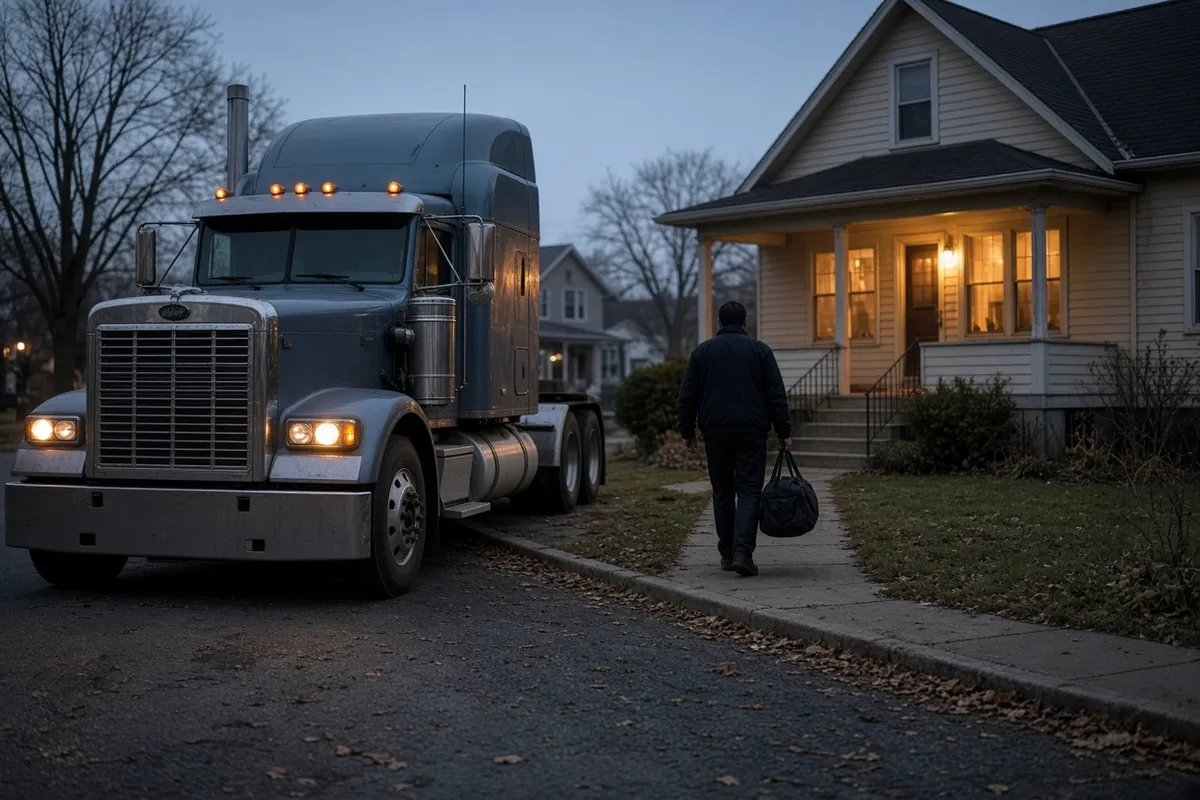
Every trucking job ad says “great home time.” The words OTR, regional and local tell you more. They describe how far you run, and that decides how often you sleep in your own bed. Here is what each one means, with real numbers that carriers publish.
What OTR, regional and local mean
There is no legal definition of these words. Each carrier uses them a little differently, so always read the details in the ad.
- OTR (over the road). You run long trips across many states, often all 48. You live in the truck for weeks at a time.
- Regional. You stay in one part of the country, such as the Southeast or the Midwest. Most regional jobs get you home every week, usually for the weekend.
- Local. You drive in and around one city or area and come back to the terminal at the end of the shift. You are home every night.
The Bureau of Labor Statistics puts it plainly: long-haul driving is a lifestyle choice, because drivers can be away from home for days or weeks at a time.
How many days at home?
“Home every two weeks” can mean one night or three days. Ask how long you stay home, not just how often you get there. Here is what three carriers publish (checked Nov. 27, 2026):
| Carrier and job | Time out | Time at home |
|---|---|---|
| Heartland Express, OTR, 48 states | 4 weeks | 4 days |
| Heartland Express, US East or US West | 10 to 14 days | 2 days |
| Prime Inc., company driver | Varies | 1 day for every 7 days on the road |
| Heartland Express, regional | About a week | Weekly |
| FFX, local, Akron, Ohio | One shift | Every night |
Do the math on the OTR line. Four weeks out and four days home is about four days at home a month. A regional driver home every weekend gets about eight.
Where do you get paid more?
OTR usually pays more per year because you run more miles. But the gap is often smaller than drivers expect.
Heartland Express lists what its drivers earned by division:
| Heartland division | Average driver earned | Miles per week |
|---|---|---|
| OTR, 48 states | $69,474 | About 2,500 |
| OTR, US East | $72,032 | About 2,250 |
| OTR, US West | $64,867 | About 2,300 |
| Atlantic Regional | $65,133 | 2,100 to 2,400 (regional average) |
| Midwest Regional | $61,045 | 2,100 to 2,400 (regional average) |
Source: Heartland OTR page and Heartland regional page, checked Nov. 27, 2026. The site does not say which year these averages cover.
At this carrier, the 48-state OTR average is about $4,300 a year above Atlantic Regional, and the US East OTR division earns more than the 48-state fleet while getting drivers home more often. The same site lists top drivers at $79,000 to $99,000. Those are the best drivers, not what you should plan on.
Local jobs usually pay by the hour. FFX’s local job in the Akron area pays $25 an hour plus a 10-cent-a-mile bonus. The company says that averages $28 an hour, or about $1,540 a week at 55 hours. That works out to roughly $80,000 a year if you work every week at those hours. Local hours are long, though. Fifty-five hours a week is a lot of time on the clock, even if you sleep at home.
For the whole country, BLS says the median heavy truck driver earned $58,640 in May 2025. The lowest 10% earned less than $40,140 and the top 10% more than $79,380. BLS also notes that most heavy truck drivers are paid by the mile, plus bonuses.
Real miles: the number that decides your check
If you are paid by the mile, the rate means nothing without the miles. A high rate on 1,800 miles a week can pay less than a lower rate on 2,500.
When a recruiter gives you a number, ask three questions:
- What is the average weekly miles for drivers on this account? Not the top driver, not “up to.”
- Are those practical miles or short miles? Carriers pay on different mileage systems, so the same trip can count as fewer paid miles.
- What do I get for waiting? Ask about detention and layover pay. On long runs you can sit at a shipper for hours.
Regional runs are shorter, so you spend more time loading, unloading and in city traffic. That is one reason regional miles are often a bit lower than OTR.
Logbook rules are different for local drivers
All three job types follow the same hours-of-service limits. But many local drivers do not have to keep a logbook at all.
Under the federal short-haul exception, you do not need a log or an ELD if you stay within 150 air miles (about 172 regular miles) of your work reporting location, return there and are released within 14 hours, and get at least 10 hours off between shifts. Your carrier keeps time records instead. If a day runs past those limits, you need a log for that day.
Is there home-daily work for new drivers?
It exists, but it is harder to find. Many local jobs ask for experience. The FFX local job above, for example, requires 12 months of verifiable CDL-A tractor-trailer experience.
Carriers that train their own students often start them on long runs with a trainer. Prime, for example, says new drivers run 30,000 team miles of more training after they get the CDL. Once you have a year of safe driving, more local and regional ads are open to you, like the FFX job above.
If you need to be home every night from day one, look at:
- Local delivery and pickup jobs that say “new CDL grads welcome” in the ad.
- Class B jobs, such as dump trucks, garbage trucks or delivery straight trucks, which are mostly local.
- Companies that offer a local job after a set time on OTR. Get that promise in writing.
Still choosing which license to get? See Class A vs. Class B CDL (CDL Weekly).
Which one is right for you?
- Pick OTR if you want to build miles and experience fast, have no one waiting at home every week, and can live in the truck.
- Pick regional if you want a weekly home schedule but still want mileage pay close to OTR.
- Pick local if you need to be home every night and are fine with hourly pay, long shifts, more city driving and often more loading and unloading.
If you are still in school, here is how long it takes to get a CDL. If you plan to run OTR across the West this winter, read about I-80 closures in Wyoming before your first trip.
More pay news is in our Pay & Jobs section.
What it means for drivers
- OTR means the most miles and the least home time. At one carrier we checked, OTR was out 4 weeks for 4 days at home.
- Regional jobs are usually home weekly, with 2,100 to 2,400 miles a week at one carrier. Pay can be close to OTR.
- Local jobs are home every night and usually pay by the hour. Many want 12 months of experience first.
- Ask for average pay of real drivers, not the top driver, and ask how many days at home you get, not just how often.
- Carriers that train new drivers often start them on long runs. Prime, for one, adds 30,000 team miles of training after the CDL.
Sources
- Heartland Express: OTR driving jobs (pay, miles and home time by division, checked Nov. 27, 2026)Primary source
- Heartland Express: Regional driving jobs (checked Nov. 27, 2026)Primary source
- Prime Inc.: Pay and benefits, home policy (checked Nov. 27, 2026)Primary source
- Prime Inc.: Benefits of company-sponsored training
- FFX: Local CDL-A truck driver, home daily, Akron, Ohio (checked Nov. 27, 2026)Primary source
- Bureau of Labor Statistics: Heavy and tractor-trailer truck drivers, pay (May 2025 data)Primary source
- 49 CFR 395.1(e): Short-haul exception (150 air-mile radius)Primary source
Published